

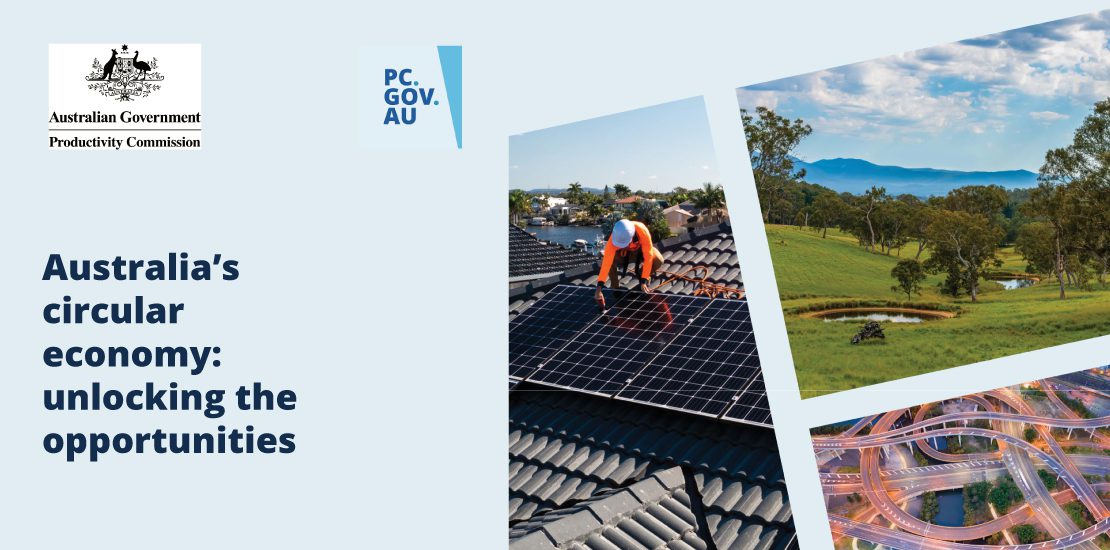
In January 2026, the Productivity Commission released its final report, Australia’s Circular Economy: Unlocking the Opportunities—a two-year examination of how Australia can reduce waste, improve materials efficiency‑ and build stronger circular systems.
The report focuses on three areas:
- How Australia can lift materials productivity.
- Priority circular opportunities across sectors and supply chains.
- Barriers holding back progress and how to address them, including place-based‑ initiatives such as circular industrial precincts.
As a long‑standing advocate for stronger electronic product stewardship, ANZRP actively contributed to the inquiry, pushing for reforms that would strengthen Australia’s circular economy.
ANZRP’s Advocacy: Putting Electronics at the Centre
Throughout the process, ANZRP championed measures to improve circularity for electrical and electronic products, including:
- Stronger sustainable procurement pathways
- Expansion of regulated product stewardship
We also highlighted the need to expand the National Television and Computer Recycling Scheme (NTCRS) to include small electrical and electronic equipment (SEEE) addressing one of Australia’s fastest growing and highest risk‑ waste streams.
What the Productivity Commission Concluded
The Productivity Commission found that, despite innovation pockets, Australia’s transition to a circular economy remains slow. Key barriers include high costs, inconsistent regulation and a lack of practical guidance for business.
To unlock progress, the Productivity Commission recommends federal, state and territory governments:
- Streamline and harmonise regulations to encourage innovation.
- Strengthen obligations for suppliers of high risk or high value waste products—particularly small electronics, solar PV‑ and EV batteries.
- Support circular innovation, including capability building‑ and collaboration programs.
Key Recommendations for E-Stewardship
- A Circular Economy Regulatory Reform Taskforce
- A national taskforce working with states and territories to accelerate regulatory alignment.
- Stronger Product Stewardship
- Electronics feature prominently among priority products needing more robust stewardship arrangements.
- Prioritising Electronics
- Small electronics, solar PV and EV batteries are identified as high value or high risk and in need of improved end‑of‑life management.
What This Means for Australia’s E-Stewardship‑ Sector
The report clearly signals that electronics are central to circular economy progress. Two major future opportunities stand out:
- A regulated scheme for small scale‑ solar PV systems
- A regulated scheme for EV batteries
The government’s recent $24.7 million investment in a National Solar Panel Recycling Pilot also reflects meaningful momentum toward circularity.
What About the NTCRS?
The report does not recommend expanding the NTCRS to include SEEE—contrary to ANZRP’s position. Instead, it suggests states and territories should lead SEEE stewardship, with the Commonwealth supporting national alignment through:
- Removing regulatory barriers
- Providing technical guidance
- Facilitating interjurisdictional coordination
- Ensuring consistent scheme design
The Productivity Commission recommends that state and territory governments work towards harmonising scope, targets, compliance standards, registration and reporting, with this work to commence within six months.
While not the federal expansion ANZRP sought, the recommendations still represent meaningful progress in addressing SEEE’s rapid growth and associated risks.
Looking Ahead
ANZRP remains committed to advancing a coherent, scalable and nationally aligned approach to electronic product stewardship. The Productivity Commission’s report sets a strong foundation, and as governments move into implementation, ANZRP will continue advocating for:
- Efficient, harmonised stewardship systems
- Policy settings that benefit industry, the environment and the community
- Improved health, safety and environmental outcomes